
Where does the impulse to create something come from for you? What role do often-quoted sources of inspiration like dreams, other forms of art, personal relationships, politics etc play?
For me, the impulse to create almost always comes from something deeply personal—an experience I’ve lived through or emotions I’ve felt toward someone or something. I write from a place that’s real to me, and more often than not, the biggest source of inspiration is the oldest muse of all: the heart.
Dreams sometimes play a role, but even then, they tend to circle back to something connected to my own life.
Politics isn’t something I write about directly in my solo work, but in Blood Red Shoes, we often channel our frustrations into songs, which naturally touch on the culture and politics of the moment.
When it’s just me, though, the writing comes from the heart space navigating the highs and lows of love in this impatient, restless world.
For you to get started, do there need to be concrete ideas – or what some have called a 'visualisation' of the finished work? What does the balance between planning and chance look like for you?
I let ideas emerge naturally. If I’m not feeling it, I leave it and come back another day when something clicks.
Once a song begins to take shape, I start imagining where it could go I can hear its potential but I never lock myself into a fixed vision of how it should sound in the end.
For me, the balance is always weighted toward feeling over strict planning, allowing chance to shape the music as much as intention.
Is there a preparation phase for your process? Do you require your tools to be laid out in a particular way, for example, do you need to do 'research' or create 'early versions'?
For this album, I wrote everything on a small children’s nylon-string guitar. My thinking is simple: if a song can stand on its own in such a stripped-down form, then whatever I add to it later will only make it stronger. That’s how I know it’s a good song at its core.
Once I’ve got that bare version working, I’ll often make a demo and start adding a few elements to see how it develops. Creating a couple of versions helps me iron out melodic details and figure out what really serves the song.
It’s not about elaborate preparation I guess it’s more about starting from something raw and honest, then shaping it until it feels complete.
Do you have certain rituals to get you into the right mindset for creating? What role do certain foods or stimulants like coffee, lighting, scents, exercise or reading poetry play?
I definitely need a certain kind of feng shui to write songs, though it can be unpredictable.
Sometimes it’s as simple as sitting on the floor in a particular room. Distractions make it harder, so I often find that booking an Airbnb or working somewhere different from my own house helps shift my mindset. Coffee is a staple, and occasionally red wine makes an appearance. Lighting is important too - nothing overly bright.
Honestly, it’s hit or miss when I sit down to write; sometimes the magic happens, sometimes it doesn’t. While working on this album, I even moved my desk to the middle of my room so I wouldn’t have my back to the door.
I ended up making rough recordings like that, basically turning my bedroom into a makeshift reception office accidentally functional, but it worked.
For your latest release ‘June Gloom’, what did you start with? If there were conceptual considerations, what were they?
"June Gloom" started with a single thought that came out of my mouth exactly as it was in my head: “What becomes of you and me? I guess we’ll have to wait and see.” The UFO reference is just me being me—I’m always going on about aliens and random things and it felt like I just needed to meet someone who matched my alien.
At its core, the song is about depression. It’s simply my thoughts put into music. I wrote it, like the rest of the album, on that same little kids’ nylon-string guitar basic, but I loved the melody.
When it came to production, we kept it minimal, giving it a lounge feel I really love, then mixed in some Beatles-style Mellotron to give it that extra texture.
Tell me a bit about the way the material for the new album developed and gradually took its final form, please.
I had all the songs in demo form, just guitar, some xylophone, and vocals, no drums. I met the producers, Oscar Robertson and Dave Bardon, through Miles Kane, who I’d sung backing for on a tour just after COVID.
Miles had made a record with them, and they have this great studio in London. I had a feeling they’d understand what I was trying to do, and since they both play so many instruments, I thought together we could turn these stripped-down songs into something full and band-like.
I came in, played the songs live in the room, shared the demos, and we all just riffed on ideas and tried things out. We threw everything at the tracks at first, then stripped away what didn’t serve the song. We ended up working at a fast pace pretty much one song a day.
What makes lyrics good in your opinion? What are your own ambitions and challenges in this regard?
For me, good lyrics are the thoughts you already have in your head—things that feel obvious, but are actually really hard to put into words. That’s what I’ve always admired about Elliott Smith’s writing: his lyrics are so observational that they seem almost simple, yet they hit with this deep relatability.
It’s like using a different part of your brain to sing words that connect without sounding dumb. Sometimes “dumb” can work—but there’s a fine line. My challenge is to tap into that space as much as possible: to write something relatable, but still avoid being cheesy or overly basic.
What are areas/themes/topics that you keep returning to in your lyrics?
For this album, I wanted the simplicity of love songs from the 1950s. Think Patsy Cline or Connie Francis. Even the titles have that kind of vibe: “Tell Me You’re Sorry,” “Who Are You Foolin’,” and the album name Bye Bye Jackie. I miss songs that just say it how it is when it comes to love, so I wanted to put my own spin on that directness.
I also worked some dry humour into the lyrics, because if you know me, that’s very much my vibe. I grew up with Irish parents, and we tend to find the humour in almost everything.
Many writers have claimed that as soon as they enter into the process, certain aspects of the narrative are out of their hands. Do you like to keep strict control or is there a sense of following things where they lead you?
I’m definitely about seeing where things go.
Sometimes a song just tells you the way. I call those the “songs from the sky.” They show you where they need to go, almost as if they write themselves.
There are many descriptions of the creative state. How would you describe it for you personally? Is there an element of spirituality to what you do?
I think creative people are often deep thinkers, and I’m definitely one of them. I’m always looking at the bigger picture of life.
I wouldn’t say I’m religious, but I am spiritual, and I’m endlessly curious—especially about people and things that aren’t the norm. To me, whether you’re writing songs, books, or films, you need that kind of curious mind to fuel the work.
Once a piece is finished, how important is it for you to let it lie and evaluate it later on? How much improvement and refinement do you personally allow until you're satisfied with a piece?
It’s easy to tinker with a song endlessly, but there comes a point where you have to let go. I think I’ve gotten better at recognising that point, and it comes with experience and confidence. I don’t think I’ll ever be completely satisfied with a piece, but I get it as close as I can.
I actually think that’s healthy if you ever believe something is completely perfect, you stop striving. For me, there will always be the thought that I could do better, and that’s what keeps me moving forward.
How do you think the meaning, or effect of an individual piece is enhanced, clarified or possibly contrasted by the EPs, or albums it is part of? Does each piece, for example, need to be consistent with the larger whole?
I don’t think a piece has to be completely consistent with the rest of an album. I love some records where every song feels different, and others where it all plays like one continuous piece.
Bye Bye Jackie feels consistent in its own world that’s just what I was going for this time but in music and art, I don’t believe there are any rules.
In terms of what they contribute to a song, what is the balance between the composition and the arrangement (including production, mixing and mastering)?
If you mean on my record, I’d say the song is still my song the structure never really changed but the vibe definitely shifted on some tracks. For example, a few became faster-paced, others slowed down.
I enjoy the mixing stage because that’s when you can really play around with sounds and effects. All of those elements production, mixing, mastering add to the song, but ultimately, the song is the song.
After finishing a piece or album and releasing something into the world, there can be a sense of emptiness. Can you relate to this – and how do you return to the state of creativity after experiencing it?
Yes, I can definitely relate. You pour so much of your energy and soul into something, and once it’s out, there can be this strange anti-climax.
I’m not even sure what I expect, but sometimes people just listen and move on, or they’ll say, “Yeah, nice work,” and I’m like—what?! Nice work? I put my blood, sweat, and tears into this! But then I realise I’m guilty of the same thing when I watch a film, I don’t always stop to think about what went into it. I just watch it and move on.
It’s a funny feeling, and in a way, the release is just the beginning. I also think musicians often struggle with mental health because we’re putting ourselves out there constantly, and now we have to do so much beyond the music answering interviews like this, updating websites, making videos, creating content, doing our own accounts. We’re jacks of all trades, often for little or no pay.
You either have to love it, or be a slave to it … it's in you and it's all you know. It chooses you—otherwise, why do it at all?

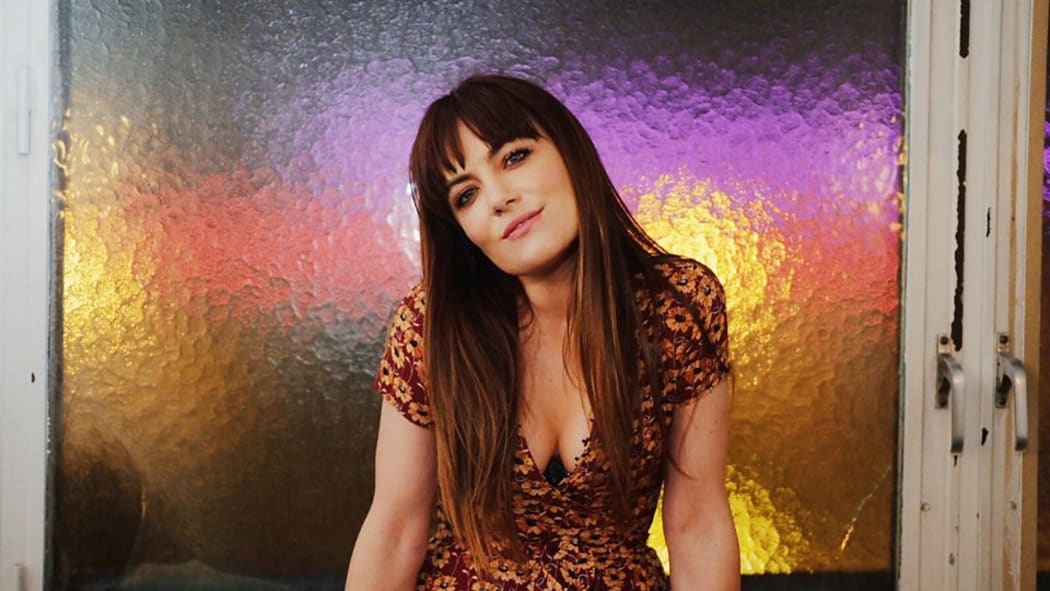
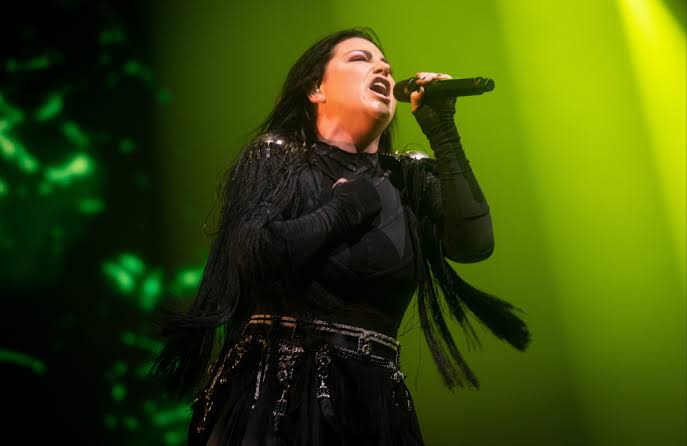
Laura-Mary Carter Interview Image (c) the artist
“More often than not, the biggest source of inspiration is the oldest muse of all: the heart.”